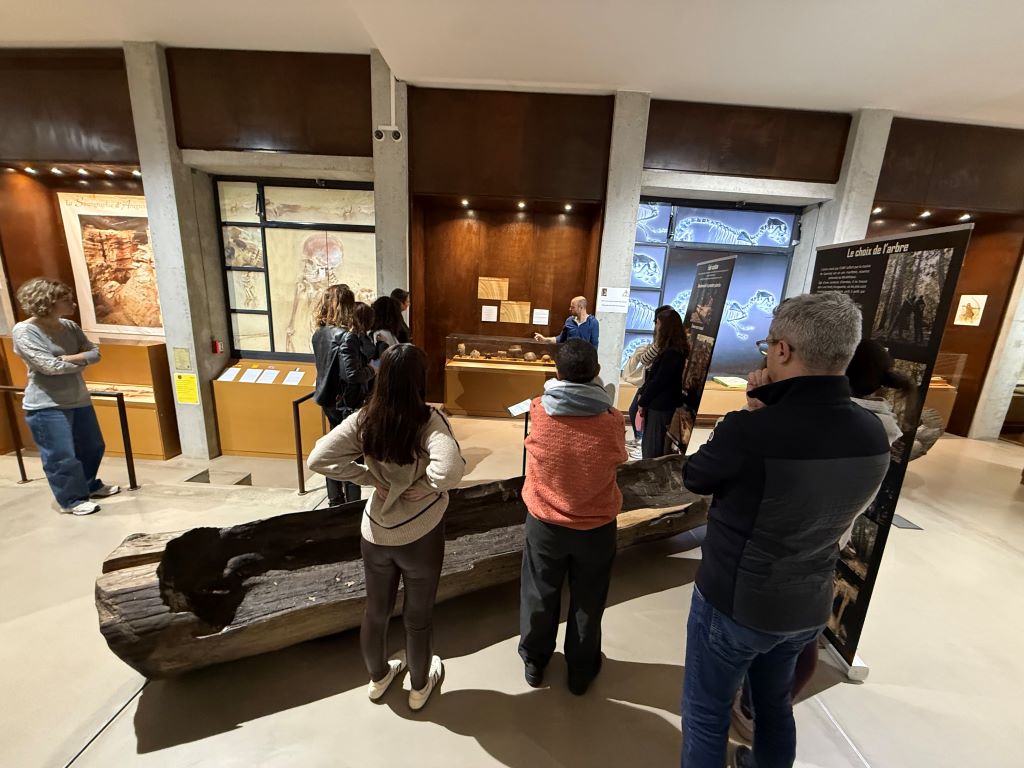
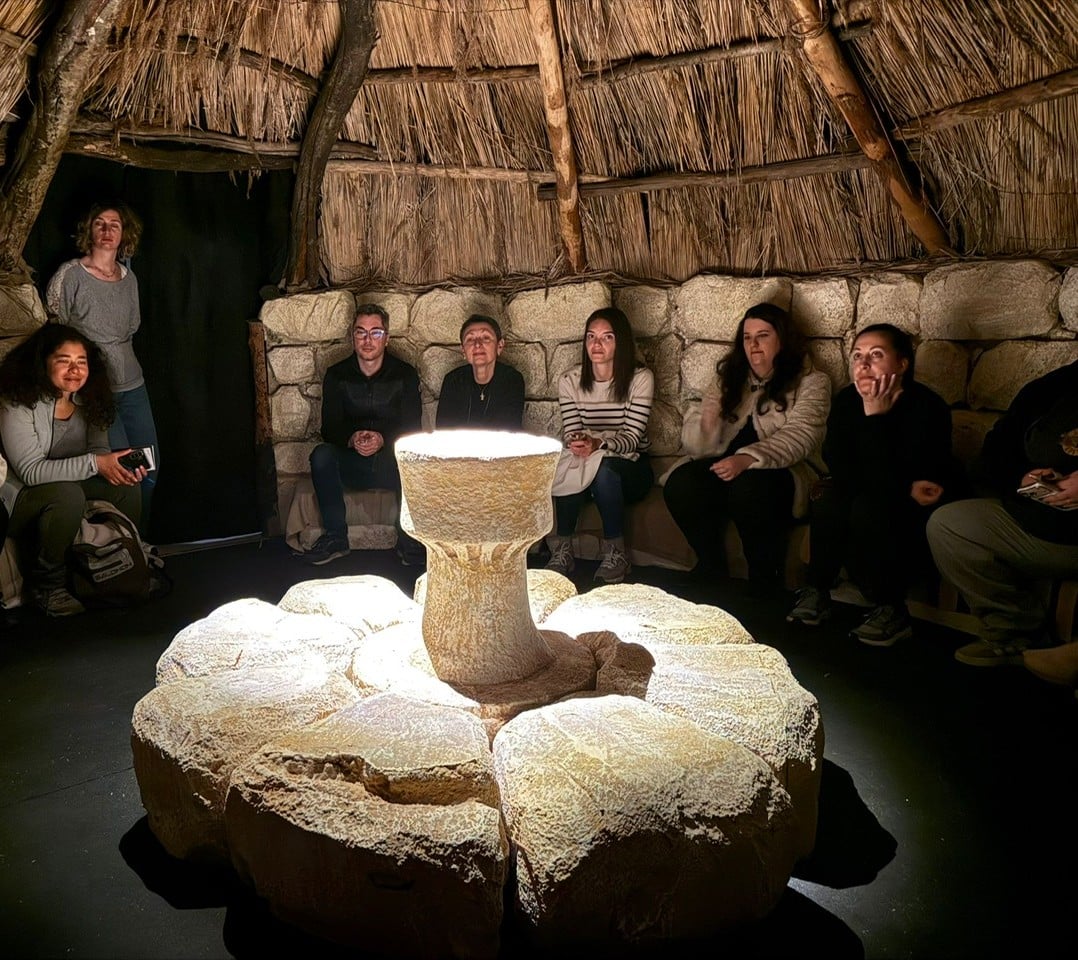
Designed for visitors and schools alike, the museum combines archaeological exhibitions, natural resources and contemporary art. Its permanent gallery displays remains from over 10,000 years of human occupation, silent witnesses to the different civilisations that have left their mark on the Alta Rocca.
A historical journey through the major periods
The Mesolithic period (9000 to 6000 BC) - the first Corsicans :
The oldest traces of settlement date back to 9,000 BC, with the arrival of nomadic groups from the sea. Living from fishing, gathering and hunting, these communities used local resources to make their tools. The Lady of Bonifacio, an exceptional skeleton preserved in the museum, is a precious witness to this.
The Neolithic (6000 to 2000 BC) - sedentarisation and innovation :
Around 5800 BC, new inhabitants arrived with a Neolithic lifestyle: livestock rearing, agriculture, pottery-making and settlement in villages. Trade with Sardinia brought flint and obsidian. The emergence of metallurgy marked the end of this era, as did the beginning of megalithism in Corsica.
Bronze Age (2000 to 800 BC) - chieftains and fortifications :
The south of Corsica is covered with casteddi (fortified dwellings). Menhir statues, such as the one at Aravina I, represent powerful warrior chiefs, the symbol of a hierarchical society focused on controlling resources (metals, food). Emblematic sites such as Cuccuruzzu and Araghju illustrate this period.
The Iron Age (800 to 200 BC) - villages and first contacts :
The fortifications gave way to structured villages such as Cuciurpula. The communities then lived in relative autarky, but a few objects from Sardinia or Etruria bear witness to the first exchanges. From 550 BC, the Corsicans had to coexist with the Greeks, the Etruscans and then the Romans, who conquered the island in the 3rd century BC.
From Antiquity to the 17th century - The Middle Ages and Genoese domination :
The Alta Rocca remained marginal during Antiquity, but experienced a medieval boom with the appearance of villages, churches and castles such as Capula and Roccataddata. It became the stronghold of noble families such as Rinucciu della Rocca. After the fall of the local lords, Genoa took power and razed the fortresses to the ground. The following centuries were marked by barbarian incursions until peace was restored in the 17th century.
From the 18th century to the present day - traditions and changes :
A land of shepherds, craftsmen and farmers, the Alta Rocca has long remained faithful to its rural traditions. This way of life lasted until the 20th century, before being disrupted by the wars, the rural exodus and the development of tourism. Today, this mountain region continues to preserve a strong identity, rich in its past.
To see at the museum:
The Lady of Bonifacio
Neolithic pottery and tools
A Bronze Age statue-menhir
Bronze and steel objects from the Iron Age
A Christ in ivory from the 16th century
Traditional bells and objects from rural life