A Bronze Age fortress :
Discovered in 1959 by the archaeologist Roger Grosjean (also known for the Filitosa and Cauria sites), the Cuccuruzzu site is one of Corsica's rare casteddi, fortified settlements from the Bronze Age (around 1800 BC to 800 BC). Archaeological research was continued and enhanced between 1960 and 1990 by François de Lanfranchi.
The casteddu, built into the mountainside in the middle of a spectacular granite chaos, dominates the northern slope of the Levie plateau. Below, a village surrounded by a protective wall (not accessible to the public) and several terraces bear witness to dense and organised human occupation.
La Torra, the heart of the monument :
At the centre of the site stands the Torra, a tower probably used for storing and processing foodstuffs. Part of its original roof is still visible. The artefacts found there are now preserved and on display at the Musée de l'Alta Rocca.
To ensure the conservation of the site while enhancing the visitor experience, in 2016-2017 the Collectivité de Corse carried out restoration and development work, accompanied by preventive excavations (INRAP), which enabled us to gain a better understanding of the architecture of the casteddu and open up new areas for visitors.
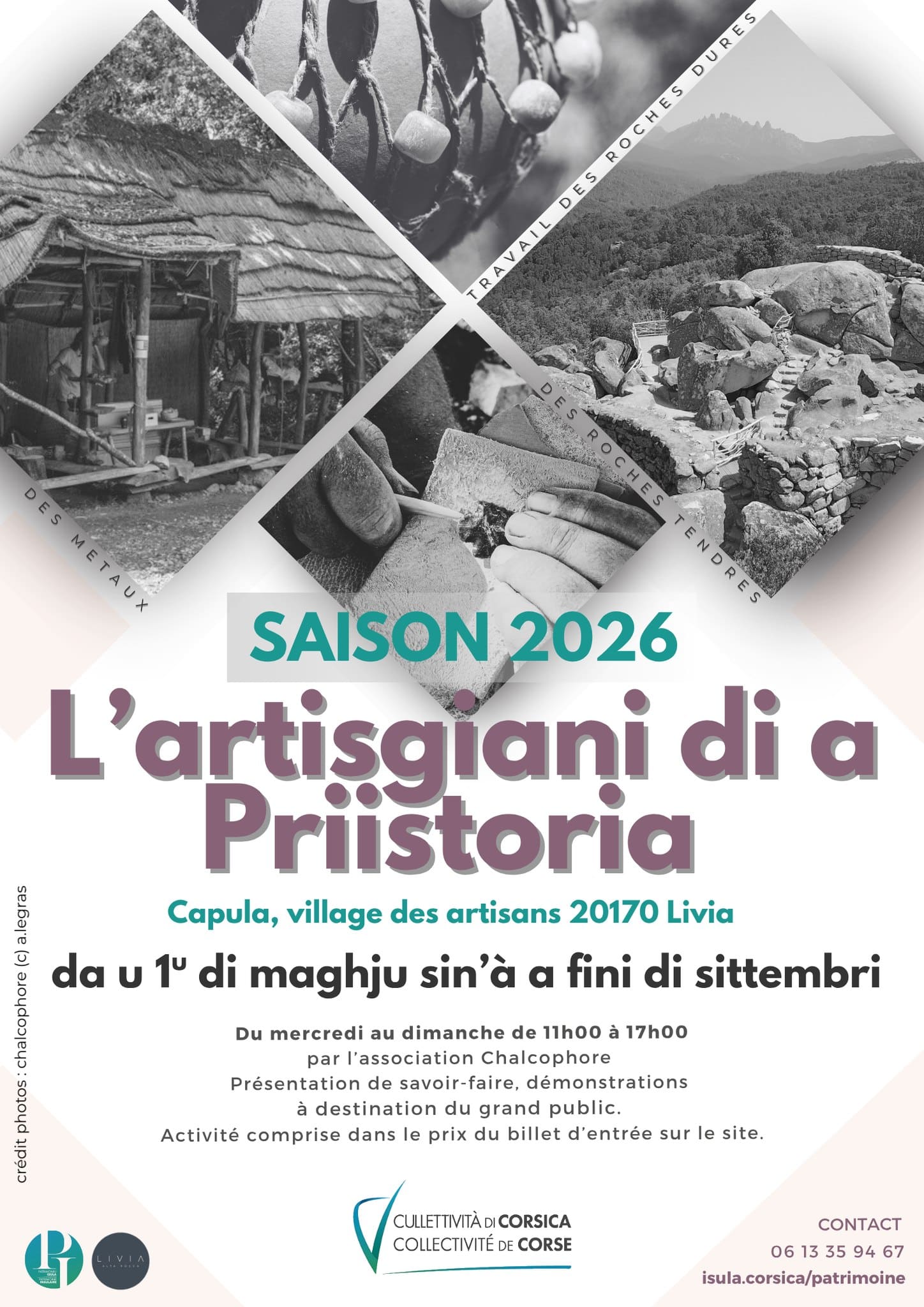
A presentation of traditional craft skills accompanied by demonstrations is offered to the public, offering an immersion in ancient techniques. The event runs from 1 May to the end of September and welcomes visitors from Wednesday to Sunday, 11am to 5pm. It's open to all, giving visitors a chance to discover and better understand the crafts of yesteryear.
⚠️ Access conditions
During the summer (mid-June to mid-September), access to the site may be restricted in the event of a high fire risk.
➡️ Before your visit, be sure to consult the forest fire alert map updated daily by the French government: https://www.risque-prevention-incendie.fr/corse/